
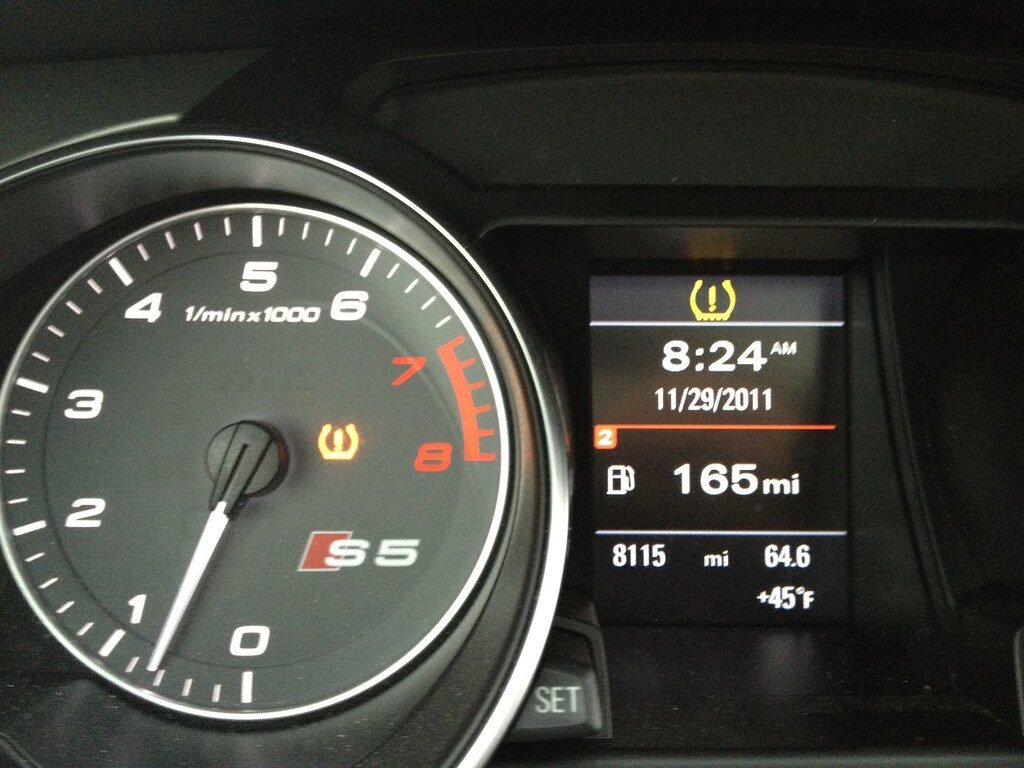
If the TPMS light comes on, your car is telling you to check the tires. Sometimes the fix is simple. Sometimes the light points to a leak or sensor problem that needs attention fast.
What TPMS means
TPMS stands for Tire Pressure Monitoring System. The system tracks tire pressure and warns you when one or more tires drop below the safe range.
What usually turns the light on
- Cold weather that drops tire pressure
- A nail or puncture causing a slow leak
- A leaking valve stem
- Pressure set wrong after recent tire work
- A weak or failed TPMS sensor battery
What to do first
Check pressure in all four tires. Set each tire to the number on the driver door sticker, not the number printed on the tire sidewall. If the light stays on, comes back soon, or flashes, the problem is more than low air.
Do not ignore a light that keeps coming back
Driving on the wrong pressure wears out tires faster and hurts braking, handling, and fuel use. A slow leak that looks minor at first often turns into a flat at the wrong time. Our article on why tire pressure checks matter explains why routine checks pay off.
When to get the tire inspected
If you add air and the light returns, get the tire checked. If the light flashes, get it checked. If the car pulls, rides rough, or one tire looks low, get it checked before the next long drive.
At Payless Tire, we help drivers track down low pressure, slow leaks, and TPMS sensor issues with straight answers and careful service. Stop by 406 Virginia St, Tappahannock, VA, explore our services page, or use our contact page if your TPMS light is on.