
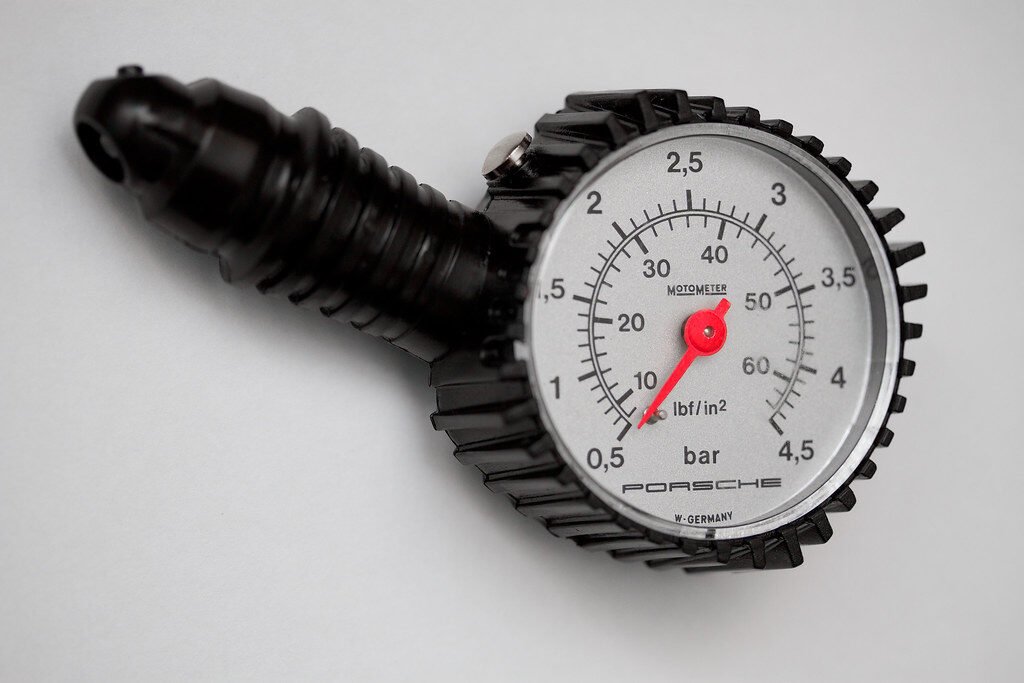
Quick answer: Check your tire pressure once a month, cold, against the sticker inside the driver’s door — not the number on the sidewall. It’s a five-minute habit that protects your grip, your gas mileage, and thousands of miles of tread life.
Of everything you can do for your car, a tire pressure check gives you the most payback for the least effort. Pressure quietly controls how the car steers, how evenly the tires wear, how much fuel you burn, and how well you stop when the road turns wet. And it drifts constantly — with weather, with time, with every small leak — which is why “I checked it a few months ago” usually means it’s wrong right now.
What the wrong pressure actually does
Too little air and the tire flexes more than it was designed to, building heat with every mile. That means faster shoulder wear, mushier handling, longer wet-braking distances, worse fuel economy — and in the worst case, a blowout, since overheating is one of the leading causes of highway tire failure. Too much air and the problem flips: the tire rides harsh, wears out its center first, and puts less rubber on the road, which costs you grip. The pressure your vehicle’s engineers chose is the balance point between all of it.
The weather is adjusting your tires without asking
Air shrinks as it cools — tire pressure drops roughly 1 psi for every 10°F fall in temperature, then climbs back as things warm up. That’s why the first cold snap of the season lights up so many dashboards: the tires were fine last week, and the weather changed the math overnight. It’s also why checking monthly beats waiting for the warning light, which doesn’t trigger until a tire is already well below spec. If your light is already on, our guide on what the TPMS light means covers the next steps.
The door sticker is the number that counts
The correct pressure for your car lives on a sticker inside the driver-side door jamb (and in the owner’s manual). The big number molded into the tire sidewall is the tire’s maximum pressure — inflating to it is a common and expensive mistake. Set every tire to the door-sticker spec, check them cold, and don’t forget the spare while you’re at it.
A pressure check done properly
- Check cold — before driving, or at least three hours after parking
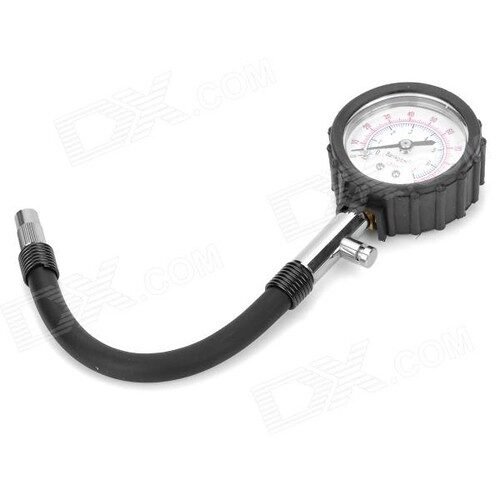
- Use an actual gauge; a tire can be 10 psi low and look completely normal
- Compare against the door-jamb sticker, never the sidewall number
- Re-check after adding air, and let the TPMS reset over a few miles
- Repeat monthly, and always before a long trip
When it’s worth having a shop look
If one tire keeps coming up low, the TPMS light returns after you air up, or the car just feels different on the road, there’s likely a slow leak — a nail, a leaking valve stem, or a corroded wheel bead. Those are cheap fixes when caught early and expensive ones when ignored, because a slow leak eventually becomes uneven wear or a roadside flat.
Common tire pressure questions
What’s the correct tire pressure for my car?
Most passenger vehicles run somewhere between 30 and 35 psi, but the exact figure is on the sticker inside your driver’s door. Use that number — not a guess, and not the sidewall maximum.
Hot or cold — when should I check?
Cold, always. Driving heats the air inside and inflates the reading by several psi, so a hot check can trick you into bleeding out air the tire actually needs. First thing in the morning is ideal.
Is overinflating really a problem?
Yes. Extra air doesn’t add safety margin — it reduces the contact patch, hardens the ride, and wears out the center of the tread early. The door-sticker spec avoids both extremes.
At Payless Tire in Tappahannock we check pressure, chase down slow leaks, and sort out TPMS complaints every day — the basics, done carefully. Find us on our services page or contact us at (804) 443-4063.