
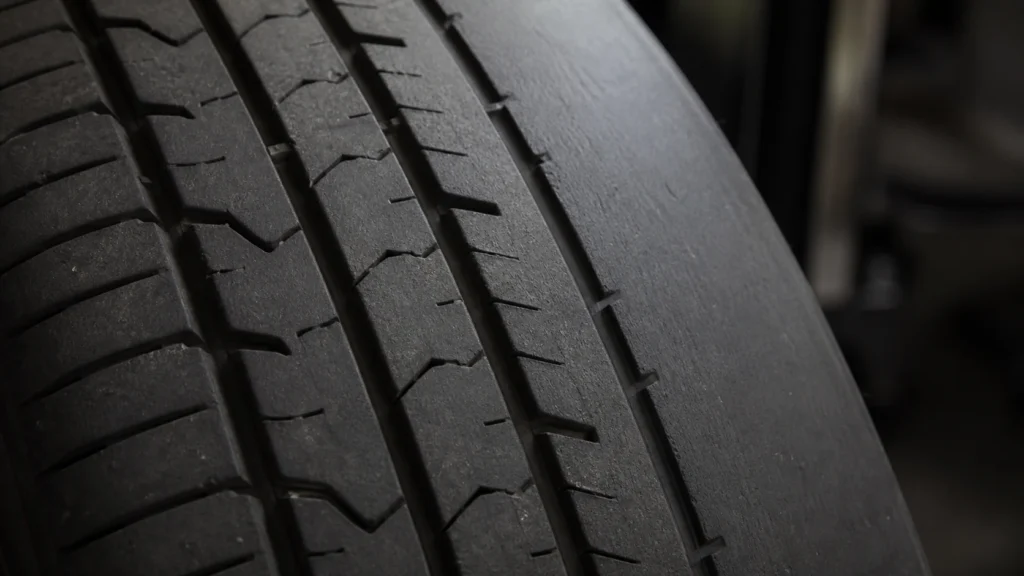
Quick answer: Your tread wears in the shape of whatever is wrong underneath. One worn edge points to alignment; a worn center means overinflation; both edges worn means underinflation; choppy “cupped” dips mean worn suspension. Fix the cause first — or the next tire wears out exactly the same way.
A worn tire is a record of everything that’s been happening to it. Alignment, pressure, suspension, balance — each leaves its own distinct fingerprint in the rubber, and once you know the patterns, a thirty-second look at your tread tells you more than most test drives. Here’s how to read what your tires have been writing down.
Start from this rule: the tire is the victim
Tires almost never wear out wrong on their own. Low pressure, missed rotations, drifting alignment, worn shocks, or an out-of-balance wheel does it to them. It’s a story every tire shop knows by heart: a driver replaces one worn tire, and months later the replacement comes back wearing the identical pattern. Nothing was wrong with either tire — the cause just never got fixed.
The pattern decoder
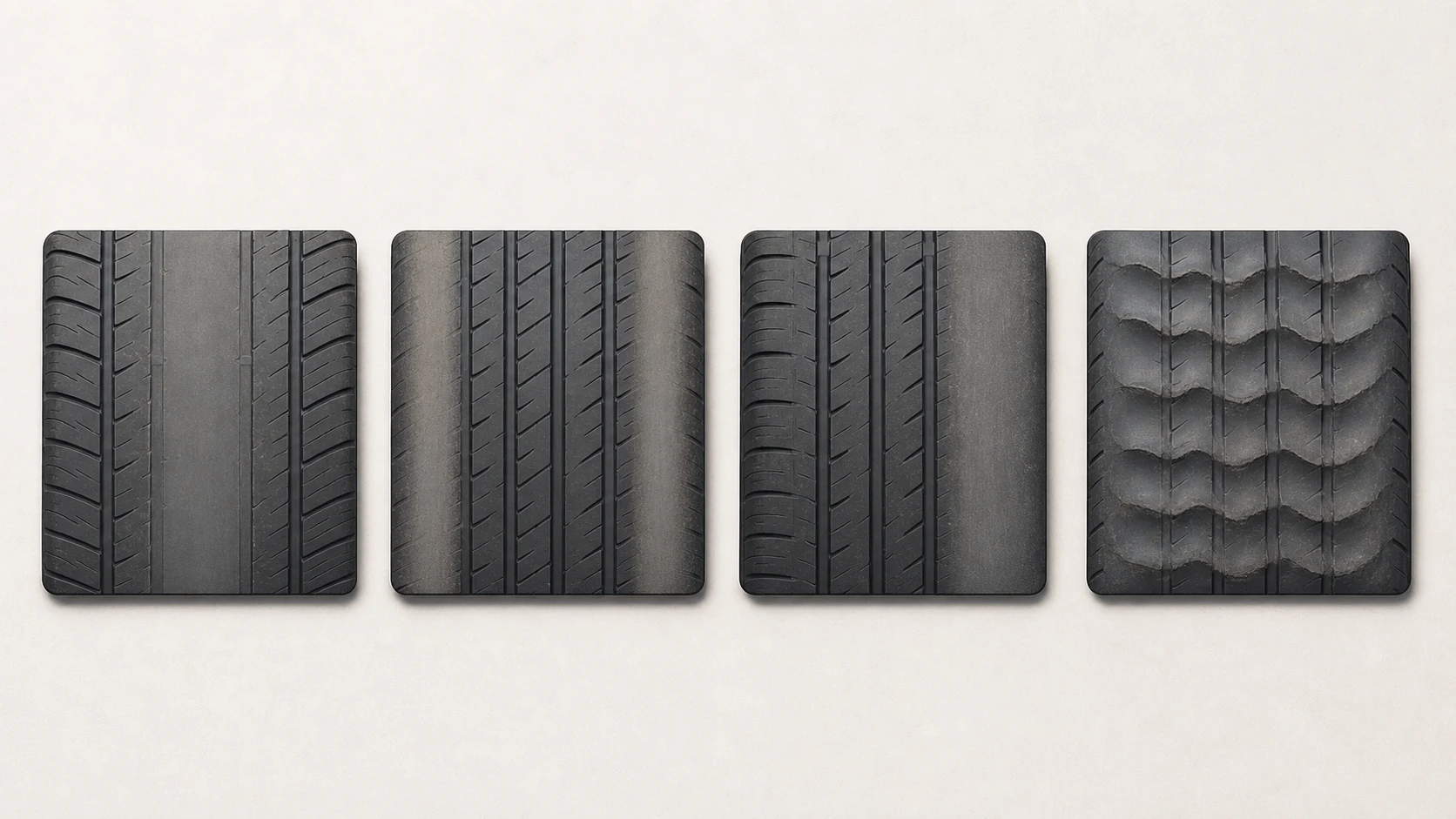
Match what you see on the tread to the most likely cause and fix:
| What you see | Most likely cause | The fix |
|---|---|---|
| Wear on one edge only | Alignment out of spec (camber or toe) | Alignment |
| Wear down the center | Overinflation — the car rides on the middle of the tread | Set correct pressure |
| Wear on both outer edges | Underinflation — low pressure loads the shoulders | Set correct pressure |
| Cupping or scalloped dips | Worn shocks/struts or other suspension parts, often with a balance issue | Suspension + balance |
| Feathering (tread ramps sharp on one side) | Toe alignment problem | Alignment |
| Flat spots | Hard braking, a locked wheel, or a tire that sat in one place too long | Inspect; rotate/replace |
The two patterns you’ll see most
Pressure and alignment cause the lion’s share of abnormal wear, and both are nearly free to prevent. Tires shed air naturally — faster in cold weather — so a set that measured perfect in fall can be riding its shoulders by winter. Alignment gets nudged out of spec by ordinary abuse: potholes, curbs, rough pavement. Neither problem announces itself, and both quietly grind away tread every mile until someone checks.
The signs that mean stop waiting
The most expensive mistake with uneven wear is patience. If you can see exposed cords, a bulge, severe edge wear, or one tire wearing dramatically faster than the rest, get it checked now — the same goes for a hard pull, a vibration at speed, or handling that gets loose in the rain. “Still drives fine” is how a $90 alignment matures into a $700 set of tires.
Wear pattern questions
Can uneven wear be fixed, or do I need new tires?
It depends how far it’s gone. Caught early, fixing the cause (alignment, pressure, or a worn part) and rotating the tires can level things back out. Once a tire is badly worn in one area or showing cords, it’s a replacement — and the cause still has to be corrected so the new one doesn’t repeat history.
How do I stop my tires from wearing unevenly?
Three habits prevent almost all of it: correct pressure checked monthly, rotation every 5,000 to 7,500 miles, and an alignment check once a year or after any hard pothole hit or new steering pull.
How much does an alignment cost compared to new tires?
A small fraction — which is the entire point of reading wear patterns early. You’re trading a cheap correction now for an expensive set of tires later.
What causes tire cupping specifically?
Cupping — that scalloped, wavy pattern of high and low spots — usually means worn shocks or struts letting the tire bounce instead of holding it against the road. An out-of-balance wheel or bent suspension part can contribute. Because it’s a suspension symptom, a new tire alone won’t stop it from coming back.
If your tread is telling one of these stories, have a technician confirm the cause and fix it before it costs you a full set. Pair that with a steady rotation schedule and you’ll get every mile your tires were built for.
More tire guides: Tire Rotation Patterns, Tire Plug vs. Patch vs. Replace, or browse the full Tire Guide.