
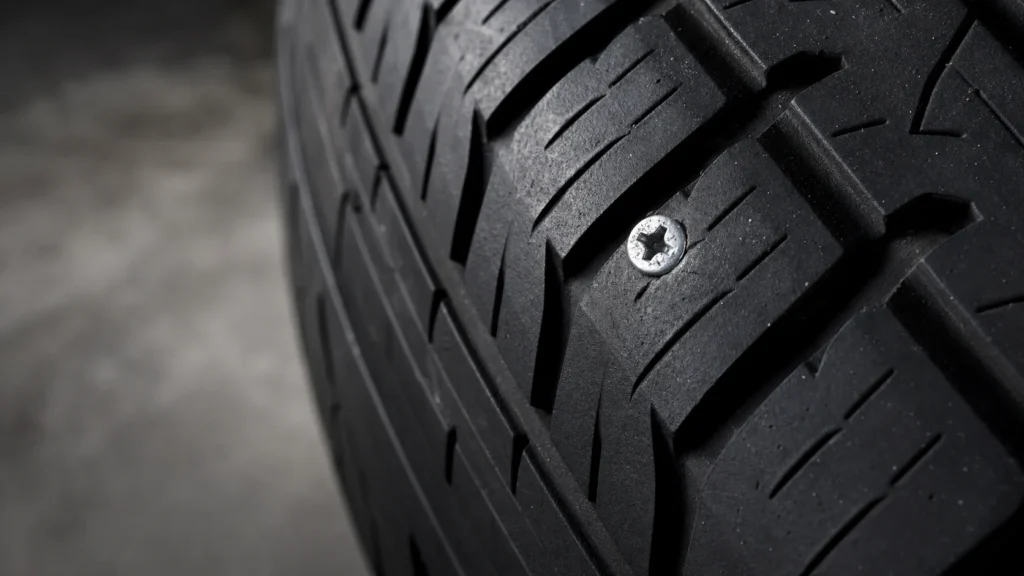
Quick answer: A puncture is usually repairable only if it’s in the main tread (not the shoulder or sidewall), smaller than about ¼ inch, and the tire wasn’t driven on flat. The only permanent repair is a combination patch-plug installed from the inside — an external plug or a can of sealant is strictly a get-me-home fix. Sidewall damage, bulges, and visible cords mean replace it.
“Can’t you just plug it?” is probably the most common question in tire repair — and the honest answer is: a plug alone was never meant to be permanent. There are four ways to deal with a punctured tire, and only one of them is an actual repair. Here’s how they compare, and how to know when none of them is safe.
The four options, side by side
| Repair type | How it works | Verdict |
|---|---|---|
| External plug | A rubber strip pushed into the hole from the outside, without removing the tire | Temporary “get-me-home” fix only — doesn’t seal the inner liner |
| Interior patch | A patch applied to the inside, but with nothing filling the puncture channel | Incomplete on its own — can let moisture into the belts |
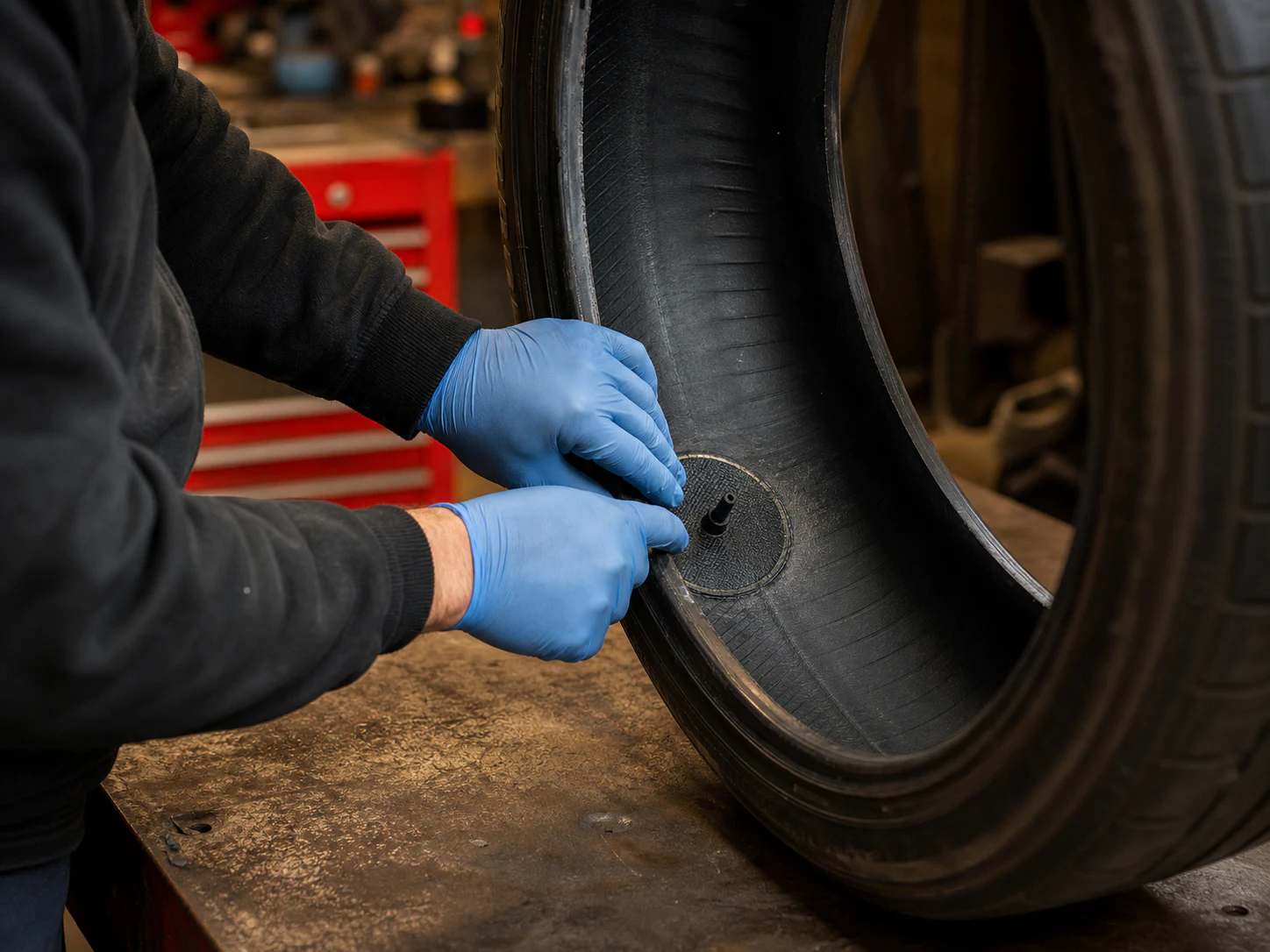
| Combination patch-plug | Tire is dismounted; a single unit both fills the hole and seals the liner from inside | The industry-standard permanent repair |
| Sealant (can/kit) | Liquid sprayed in through the valve | Emergency only — can hide damage and complicate a proper repair |
When a repair is on the table at all
Even the right repair method only applies when the damage qualifies. A tire is generally repairable when all of these are true:
- The puncture is in the main tread area — not the shoulder or sidewall
- The hole is small, roughly a quarter inch (6 mm) or less
- The tire still has good tread left
- The tire was not driven on while flat
- The inside shows no hidden damage once the tire is dismounted
Nails and screws picked up in the center tread are the classic repairable case.
The damage that ends the conversation
Some tires are done no matter how good the repair would be. Replace when you see:
- A puncture or cut in the sidewall or shoulder
- A bubble, bulge, or blister on the sidewall
- A large cut, gash, or split
- Tread already worn down near the wear bars
- Visible cords or steel belts
- Damage from driving too long on low pressure or while flat
- More than one puncture close together, or a second repair in the same area
Why the sidewall is off-limits
The center tread is backed by steel belts, which anchor a patch solidly. The sidewall has no belts and flexes thousands of times a mile — no repair will survive there, and a failed sidewall repair lets go without warning at speed. It’s why a tidy little puncture near the shoulder is often a death sentence for the tire while an ugly nail dead-center is an easy save. Location decides, not looks.
Where plugs and sealant fit in
A plug kit or a can of sealant will get you off the shoulder and to a shop, and that’s their entire job. An external plug doesn’t seal the tire’s inner liner, so air and moisture can slowly work into the steel belts. Sealant is worse for diagnosis — it can hide the real damage and make a proper inspection messier. Use them in an emergency, then have the tire repaired properly or retired.
The verdict requires opening the tire
Damage that looks minor from the outside can be severe on the inside — even a short drive on a flat can shred the inner liner in ways invisible from the driveway. The only reliable repair-or-replace call comes after the tire is dismounted and inspected from the inside. Anything else is guessing with your safety.
Repair questions, answered
Is it safe to plug a tire yourself?
As a temporary fix to reach a shop, yes. As a permanent repair, no — the plug doesn’t seal the inner liner, which lets air and moisture reach the steel belts over time. Follow it up with a proper dismount and patch-plug.
How much does a tire repair cost compared to a new tire?
A proper patch-plug is a small fraction of a new tire’s price — exactly why it’s worth doing whenever the damage qualifies. If a tire can’t be repaired safely, a good shop will show you why rather than just quote you.
Can a tire be patched twice?
Sometimes — if both repairs sit in the tread area and well apart. Repairs close together or overlapping weaken the tire, and at that point replacement is the safer money.
Is it safe to keep driving with a nail in my tire?
If it’s holding air, leave the nail in and drive gently to a shop — pulling it out just lets the air escape faster. But don’t sit on it: a slow leak becomes a flat at the worst moment, and driving low or flat is how repairable tires become replacements.
Not sure which category your tire falls into? Have it dismounted and inspected from the inside before deciding — a qualified tire shop can tell you what’s safe and what makes sense for your budget.
More tire guides: How to Read Tire Wear Patterns, Solid vs. Flashing TPMS Light, or browse the full Tire Guide.