
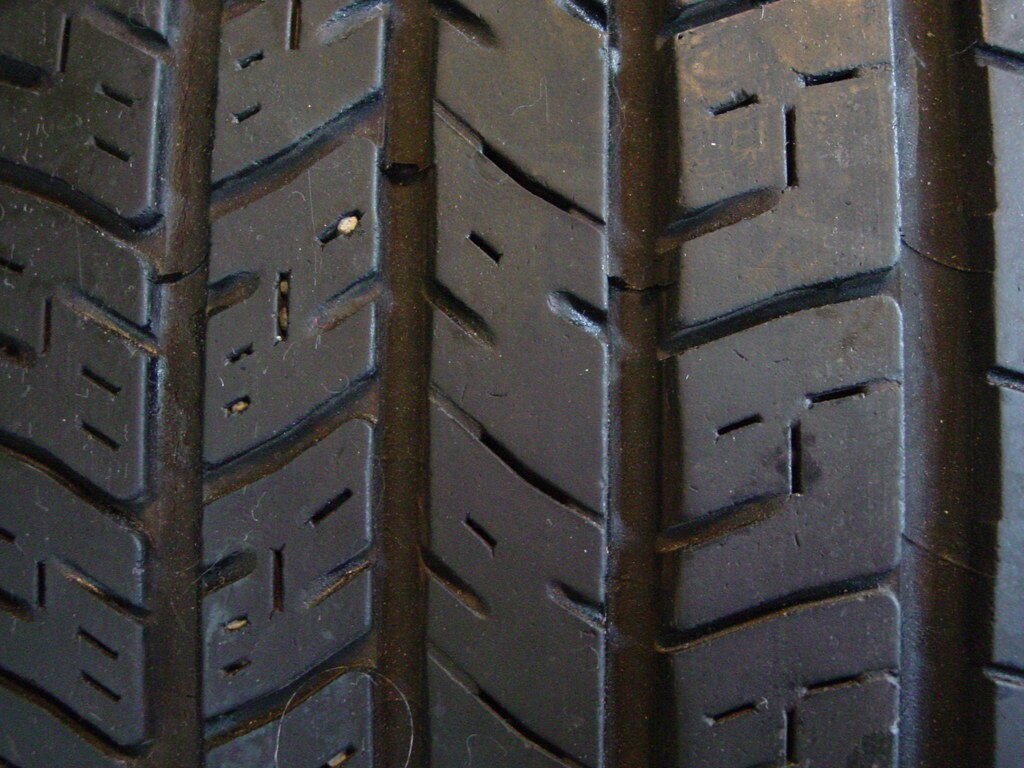
Quick answer: Replace your tires when tread hits 2/32 inch (the penny test), when you spot cracks or a bulge in the sidewall, when wear is badly uneven, or when the tires pass about six years old — whichever comes first. Everything short of that can usually be fixed for a lot less than a new set.
Tires rarely quit without warning. Long before one leaves you on the shoulder, it will usually tell you something is wrong — the ride gets louder, the rain grip fades, the tread starts looking tired. The trick is knowing which signs mean “replace me now” and which just mean a rotation or an alignment. After years of looking at worn tires here in Tappahannock, these are the five signs we take seriously every time.
1. The tread is down near the wear bars
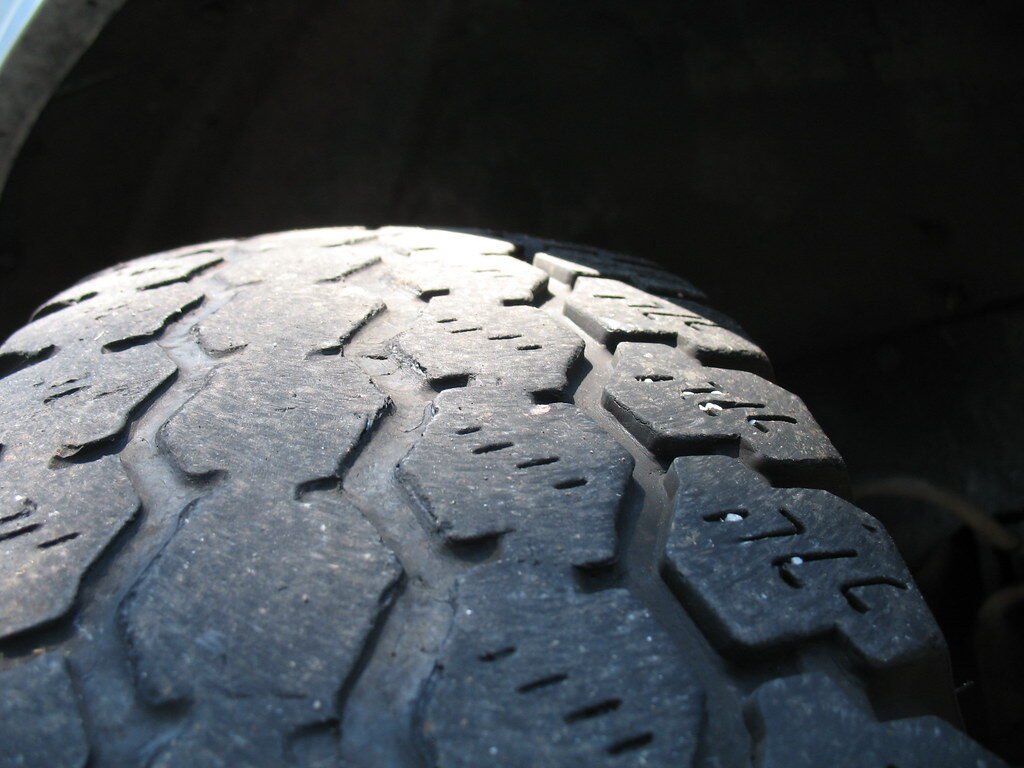
Tread depth is the single clearest replace-now signal. At 2/32 inch — the legal minimum in most states — wet grip is mostly gone and stopping distances stretch out fast. Your tires make this easy to check: small raised wear bars sit across the grooves, and when the tread is flush with them, you’re done. No wear bars handy? Grab a penny. Put Lincoln in the groove head-down; if you can see the top of his head, the tire is at or below 2/32 and it’s time. Plenty of drivers replace a little earlier than that for better rain performance, and honestly, that’s not a bad habit.
2. One part of the tire is wearing faster than the rest
A tire worn smooth on one edge or cupped in patches isn’t just an old tire — it’s a symptom. Alignment, suspension, inflation, or balance is usually behind it, and a new tire bolted onto the same problem will wear out the exact same way. Regular tire rotation catches this early, and our guide on what uneven tire wear is telling you decodes what each pattern means before you spend money on the wrong fix.
3. Cracks, bulges, or anything odd on the sidewall
Sidewall problems don’t get a grace period. Fine spiderweb cracking means the rubber is aging and drying out. A bulge or blister is worse — it means the internal structure has been damaged, usually from a pothole or curb hit, and that tire can let go suddenly at speed. If you see a bulge, treat it as a replacement, not a watch-and-wait.
4. The car feels different than it used to
Drivers usually feel a failing tire before they see it. More road noise, a shimmy in the wheel, a vague or floaty feeling that wasn’t there last year — worn or damaged tires are a common cause of all three. A highway-speed vibration in particular can point to balance problems, uneven wear, or internal damage. If that sounds like your car, our guide on why your car shakes at highway speeds walks through how to narrow down the cause.
5. The tires are simply old
Rubber ages even when the tread looks fine. It hardens, loses grip, and starts cracking — especially on vehicles that sit outside or don’t drive much. Most manufacturers say inspect closely at six years and replace by ten, tread or no tread. Checking age takes ten seconds: find the DOT code on the sidewall and read the last four digits. They’re the week and year of manufacture, so “2823” means the 28th week of 2023. If your tires are getting up there in age, a quick professional look will tell you whether they’re still safe.
Not every problem means a new tire
Before you budget for replacements, it’s worth knowing what’s fixable. A nail in the center tread of a tire with plenty of life left is usually a cheap, permanent repair. A puncture in the sidewall or a tire already down on tread is not. Our guide on when to patch a tire and when to replace it shows exactly where that line falls.
Picking the next set wisely
When it is time, the right replacement depends on how and where you actually drive — ride comfort, wet traction, tread life, and correct fitment matter more than whatever happens to be cheapest that week. Our Virginia tire buying guide breaks down how to compare options without overpaying.
Questions drivers ask about replacing tires
Do I have to replace all four tires at once?
Not always. All-wheel-drive vehicles often need all four, because a big tread-depth difference between wheels strains the drivetrain. On most front- or rear-wheel-drive cars, replacing in pairs is fine — the new pair goes on the rear axle for stability, and should closely match the remaining tires. A technician can tell you what’s safe for your specific vehicle.
How many miles should a set of tires last?
Most all-season tires are built for somewhere between 40,000 and 70,000 miles, but driving style and maintenance swing that number a lot. Rotation on schedule, correct pressure, and good alignment are what push you toward the high end instead of the low one.
Can old tires be dangerous even with good tread?
Yes. Age degrades rubber whether or not the tread wears. A ten-year-old tire that “looks new” can crack internally and lose grip, which is why age is a replacement trigger on its own — not just tread depth.
Still not sure whether your tires have another season in them? Stop by Payless Tire, 406 Virginia St, Tappahannock, VA, browse our Tire Info page, or call (804) 443-4063 — we’ll give you an honest read on what’s left.