
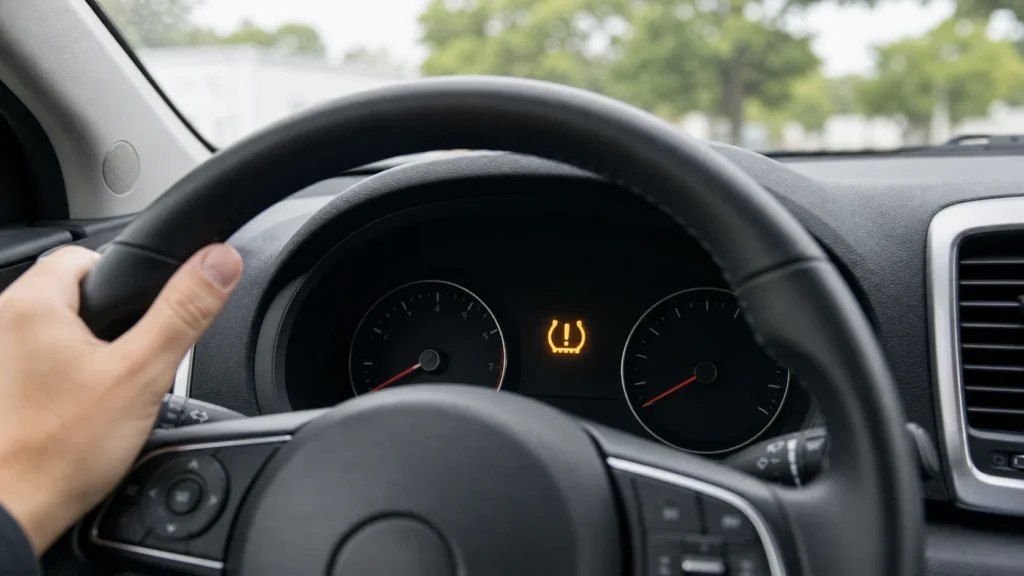
Quick answer: A steady TPMS light means at least one tire is low on air — fill to the door-sticker pressure and it should clear. A light that flashes for 60–90 seconds at startup and then stays on means the system itself has a fault, most often a dead sensor battery, and adding air won’t fix it.
The way your TPMS light behaves is a diagnosis all by itself, and most drivers never notice the difference. One version of the light costs you two minutes at an air pump. The other needs a scan tool. Knowing which is which saves you from airing up four perfectly fine tires and wondering why the light is still glaring at you.
First, what the system is doing
TPMS — the Tire Pressure Monitoring System — watches the air in your tires and warns you when one drops below a safe range, generally about 25 percent under the recommended pressure. Most vehicles use a small battery-powered sensor inside each wheel (a “direct” system); some estimate pressure from the ABS wheel-speed sensors instead (an “indirect” system). Either way, the light is the system’s only way of talking to you — and it speaks two distinct languages.
Steady vs. flashing: two different problems
Watch the light when you start the car — it tells you what to do next:
- Steady light: at least one tire is low on pressure. Air it up correctly and the light should clear within a few miles of driving.
- Flashing light (blinks for 60–90 seconds at startup, then stays solid): the monitoring system itself has a fault — most commonly a dead sensor battery or a sensor that’s stopped reporting. Air will not fix this one; the system needs to be scanned with a TPMS tool.
What sets the light off in the first place
- Cold weather. Pressure drops about 1 psi for every 10°F the temperature falls, so the season’s first cold morning trips lights all over town.
- A nail or puncture feeding a slow leak.
- A leaking or corroded valve stem.
- Pressures set wrong after recent tire work.
- A worn-out sensor battery — common once sensors reach 5 to 10 years old.
Your first move for a steady light
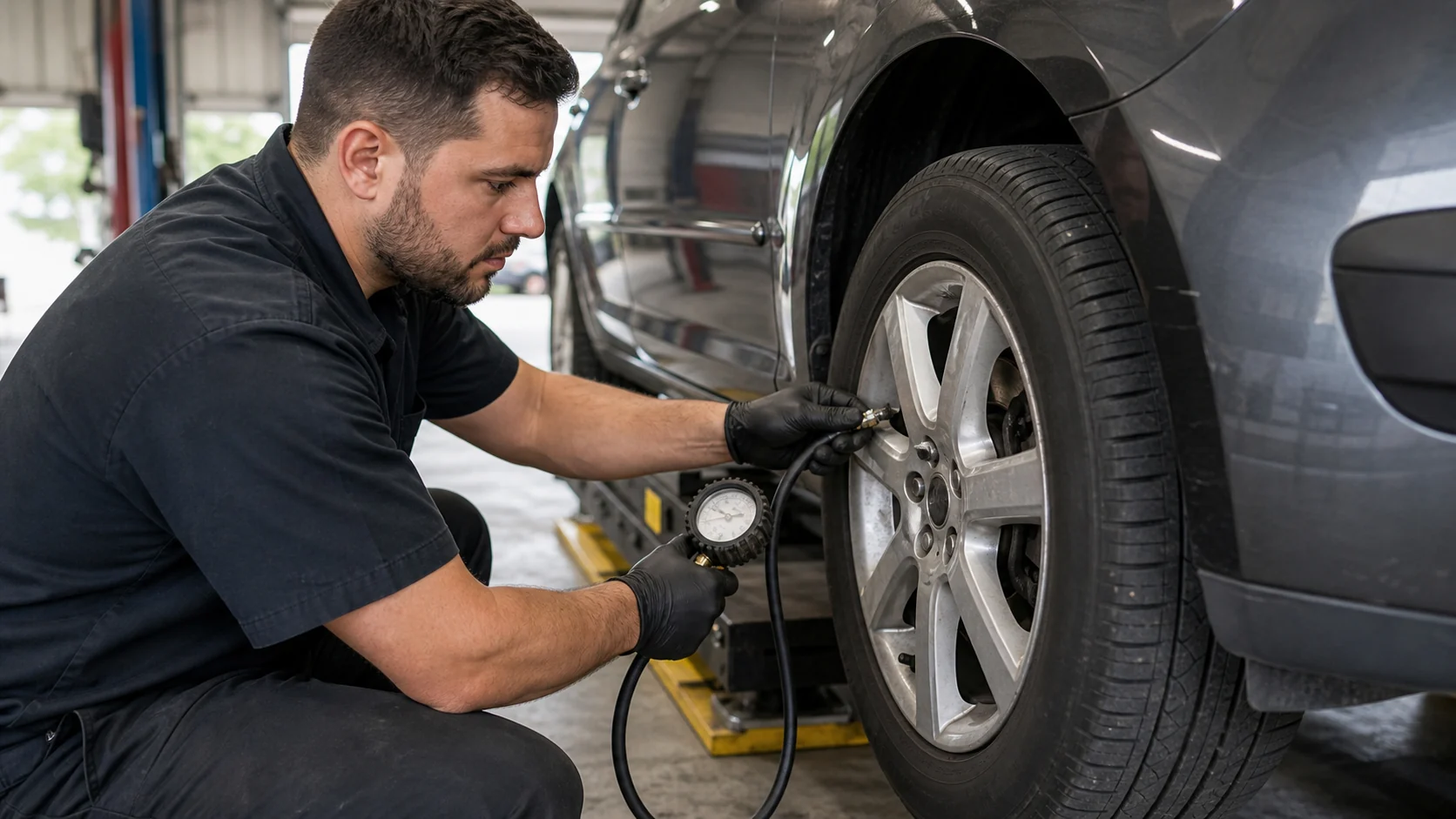
Gauge all four tires while they’re cold — before driving, or three-plus hours after parking. Fill each to the number on the sticker inside the driver’s door jamb, not the maximum molded into the sidewall; the sidewall figure is the tire’s ceiling, not your car’s spec. Once the pressures are right, give the system a few miles to notice and reset.
A light that returns is a leak talking
If the light comes back shortly after you air up, that’s not the weather — something is letting air out. Running low pressure wears the tire’s shoulders fast, dulls braking and steering, and burns extra fuel, and the slow leak that seems harmless has a habit of becoming a flat on the worst morning of your week. Get the tire inspected instead of topping it off a third time.
When a shop visit is the right call
Head in if the light returns after adding air, if it flashes at startup, if one tire visibly sags, or if the car pulls or rides rough. Each of those points past the air pump to something that needs eyes on it.
Quick TPMS answers
Is it safe to drive with the TPMS light on?
Driving a short distance to add air is fine. Continuing on an unknown low tire isn’t — a significantly underinflated tire builds heat, wears rapidly, and can fail at speed. Check pressures as soon as you can.
Why is the light on when my tires look fine?
A tire can be 8 to 10 psi low and look completely normal. Cold mornings are the usual culprit, and sometimes the system is flagging a dying sensor rather than low air — which is why a gauge, and occasionally a scan, beats eyeballing it.
How long do TPMS sensors last?
The sealed batteries typically run 5 to 10 years, and a dead sensor is replaced as a unit. If your car is approaching that age, have the sensors checked during routine tire service before they start failing one by one.
Will the TPMS light reset itself?
Usually, yes — once pressures are corrected, most systems clear within a few miles of driving. Some vehicles want a manual reset procedure (your owner’s manual has it), and indirect systems generally need a reset every time you adjust pressures.
A TPMS warning is cheap to investigate and expensive to ignore. If the light won’t clear after you’ve set the right pressures — or it’s flashing — have a tire professional check for a leak or a failing sensor before your next long drive. And for the bigger picture on what pressure does for your car, see our guide on why tire pressure checks matter.
More tire guides: How to Read Tire Wear Patterns, Tire Rotation Patterns, or browse the full Tire Guide.